Housing Policy
Solving California's Housing Crisis
California needs millions of new homes — here's how we build them without erasing what makes our neighborhoods special.
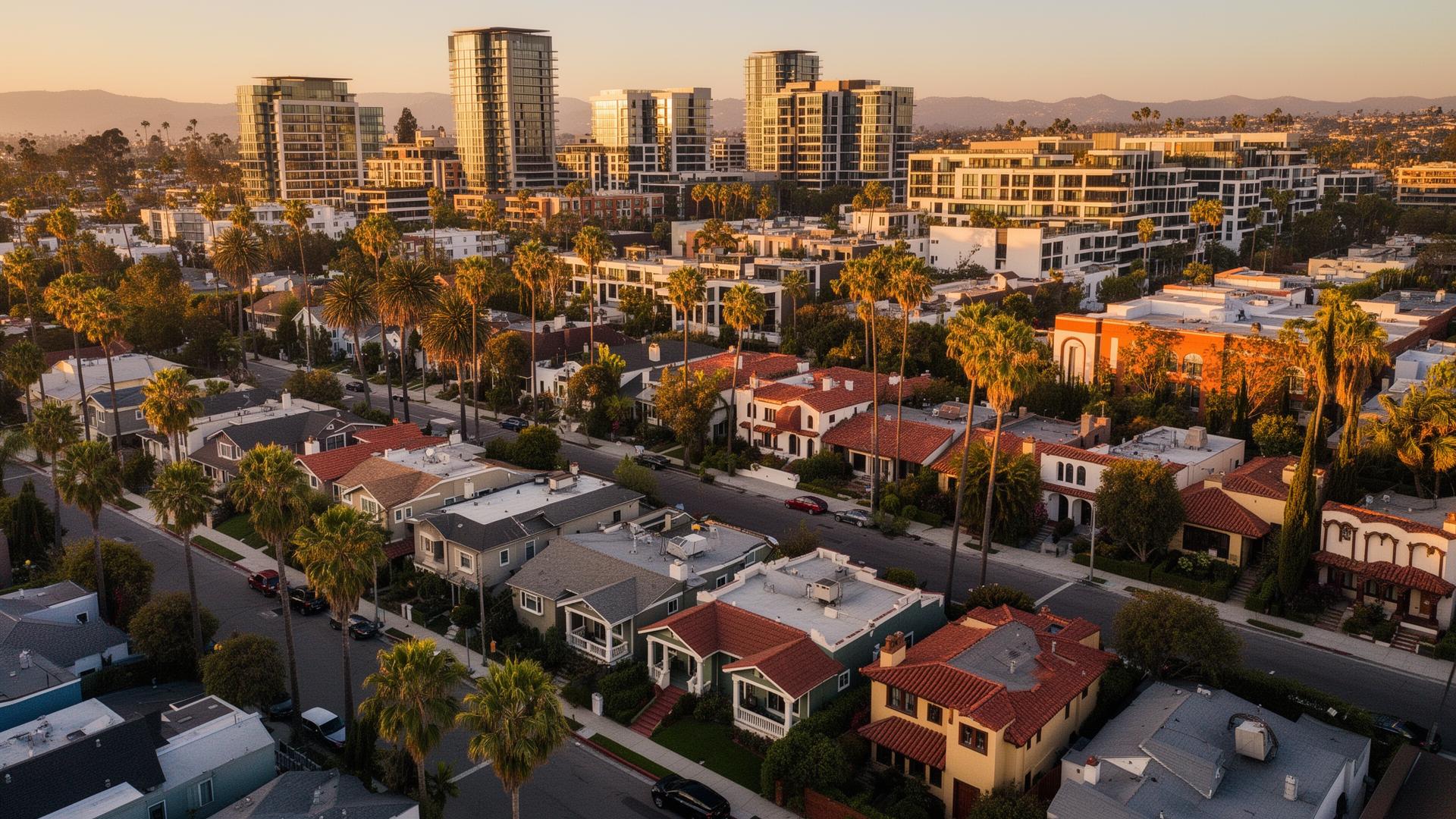
California is in the grip of a housing crisis that has been decades in the making. Home prices have soared beyond the reach of working families, rents consume ever-larger shares of household income, and homelessness has become a defining challenge for cities across the state. The numbers are stark: California needs to build roughly 2.5 million new homes by 2030 just to close the gap between supply and demand.
The urgency is real. And yet, so is the anxiety felt by longtime residents who see their neighborhoods changing — sometimes overnight — in ways that feel imposed rather than organic. New construction that ignores scale, context, and community input doesn’t just alter skylines; it erodes trust in the planning process itself.
As someone who sits on the Los Angeles City Planning Commission and has spent my career in real estate development, I believe we can — and must — do both: build the housing California desperately needs while preserving the qualities that make our cities and neighborhoods worth living in.
The False Choice
Too often, the housing debate is framed as a binary: either you’re for building more housing or you’re for protecting neighborhoods. This is a false choice. The real question is not whether to build, but how and where to build thoughtfully.
Blanket upzoning without regard for local context can produce developments that clash with the built environment, overwhelm infrastructure, and generate justified pushback. But reflexive opposition to any new construction — the instinct to freeze a neighborhood in amber — guarantees that housing costs will continue to climb and that the people who make our communities vibrant will be priced out entirely.
The path forward requires nuance, not slogans.
Smart Density in the Right Places
Not every block needs a high-rise, and not every corridor should remain single-family. The most effective housing strategies concentrate density where it makes the most sense:
Transit corridors and major boulevards — Areas served by rail, bus rapid transit, and other high-capacity transit are natural candidates for increased density. Building housing near transit reduces car dependency, cuts commute times, and supports the ridership that makes public transit financially viable.
Commercial zones and underutilized retail — Strip malls, aging office parks, and vacant commercial parcels can be transformed into mixed-use developments that add housing while activating street life.
Infill sites and parking lots — Surface parking lots in urban cores represent some of the most valuable underused land in the state. Converting them to housing is a win for both supply and urban design.
By directing growth to these areas, we can add significant housing capacity without fundamentally altering the residential streets and historic districts that define a neighborhood’s identity.
Design That Respects Context
Density alone is not the answer — design matters enormously. A well-designed six-story building on a transit corridor can feel like it belongs. A poorly designed three-story building on a residential street can feel like an intrusion.
Cities should invest in strong design guidelines that address:
Scale and massing — New buildings should transition thoughtfully to adjacent lower-density areas, using setbacks, step-downs, and landscaping to soften the interface.
Architectural character — Materials, fenestration patterns, and streetscape elements should respond to the surrounding context rather than default to generic, cost-driven templates.
Public realm improvements — New development should contribute to better sidewalks, street trees, open space, and ground-floor activation that benefit existing residents as well as newcomers.
Good design is not a luxury — it is the mechanism through which density becomes an asset rather than a liability.
Community Engagement That Actually Works
One of the reasons neighborhood preservation and housing production are so often pitted against each other is that the engagement process itself is broken. Public hearings dominated by the loudest voices, held at inconvenient times, and structured around opposition rather than collaboration do not produce good outcomes for anyone.
We need engagement models that:
Reach renters, younger residents, and non-English speakers — not just homeowners
Happen early in the planning process, before projects are fully designed
Focus on shared goals — affordability, walkability, green space, local retail — rather than yes-or-no votes on individual projects
Use digital tools and multilingual outreach to broaden participation
When communities have a genuine voice in shaping growth, the results are better for everyone — and the opposition that delays critical housing production often diminishes.
Preserving What Matters
Neighborhood character is not just nostalgia. It encompasses the human-scale streetscapes, the mature tree canopy, the local businesses, the architectural heritage, and the social fabric that residents have built over generations. These qualities have real value — economic, cultural, and psychological.
But preservation cannot mean permanent exclusion. A neighborhood that prices out the teachers, nurses, restaurant workers, and young families who sustain it is not being preserved — it is being hollowed out. True preservation means ensuring that a neighborhood can evolve and welcome new residents while retaining the qualities that make it a place people care about.
The Stakes
California’s housing shortage is not an abstract policy problem. It drives homelessness, lengthens commutes, increases emissions, deepens inequality, and forces families to leave the state. At the same time, poorly planned development that ignores community context breeds resentment and political backlash that slows down the very housing production we need.
We don’t have the luxury of choosing one priority over the other. We need leaders, planners, and developers who are willing to hold both truths at once: that California must build dramatically more housing, and that the way we build matters as much as how much we build.
From my seat on the Planning Commission and my experience in real estate, I’ve seen what happens when these values are treated as complementary rather than competing. The projects that succeed — that get built, that get community support, and that stand the test of time — are the ones that take both seriously.
California’s future depends on getting this right.